The past
We see the courage it took to begin, the sacrifices that were made and the decisions that brought the business here. The past is not a preface to be skipped. It explains the present.
Four conversations about what people are building, becoming, remembering and understanding. We believe every one of them deserves to be understood before it is advised.
Or browse the four conversationsThe business my family and I built is getting harder to grow.
An owner-led business may no longer be small in ambition, yet may still depend on you for every decision. That is not a failure. It is a stage of becoming, and it is exactly the moment this conversation exists for.
Past · what you and your family built Present · the harder decisions Future · the business you hope to leave behindI am studying and real work is about to begin, and I want to be ready.
We want to offer technical apprenticeship opportunities.
The first workplace asks for contribution, teamwork and learning in context. The gap between learning and contributing is real, and it can be crossed with real projects, real mentors and real responsibility.
Past · years of study and aspiration Present · the gap between learning and contributing Future · a career begun through meaningful workOur organisation runs on stories we have never properly told.
Organisations are shaped by moments and people that rarely enter strategy documents. Those stories still influence behaviour today. Hearing them properly is how a culture becomes visible, and then intentional.
Past · moments and people that created the culture Present · stories that still influence behaviour Future · a culture made visible and intentionalWe have plenty of data, but not the context to decide with confidence.
More information does not always create more understanding. Every data point began as a real event involving real people; better judgement comes from putting the two back together.
Past · events and choices recorded in data Present · decisions made with incomplete understanding Future · better judgement through richer contextFor the point where decisions become harder with growth: expansion, borrowing, trusting someone outside the family, the next generation.
Past · what you and your family built Present · the harder decisions Future · the business you hope to leave behind Know more → Chapter 02 · OFor students crossing the gap between years of study and the first real contribution, through project-based apprenticeships.
Past · years of study and aspiration Present · the gap between learning and contributing Future · a career begun through meaningful work Know more → Chapter 03 · UFor organisations whose culture was written in stories long before it was documented in strategy.
Past · moments and people that created the culture Present · stories that still influence behaviour Future · a culture made visible and intentional Know more → Chapter 04 · RFor researchers, analysts and data users trying to create or validate a hypothesis using their domain-relevant public data sources of context.
Past · events and choices recorded in data Present · decisions made with incomplete understanding Future · better judgement through richer context Know more →Before we think about where any of them could go, we believe they deserve to be understood.
Respect comes before advice. Understanding gives advice meaning. That is the standard every page of this site is held to.
Listen before speaking. Understand before advising. Never mistake experience for ownership. The founders write here under their own names, and reply to conversations personally.
Meet the founders →Tell us what you are building, becoming, remembering or trying to understand.
Begin a conversationA short reply from one of the founders, within three working days. No obligation follows a conversation.
Every morning across Kerala, thousands of owner-led businesses open their doors. They were not created to become headlines. They were created because someone chose to build: a livelihood, a name customers could trust, work for other people, and a future for a family.
There are moments in a journey when the old way no longer answers every question, while the new way is not yet clear. This page is for those moments.
Kerala has spent recent years actively encouraging enterprise. The Government of Kerala's Year of Enterprises programme was designed not only to start new enterprises but to build a support system involving local bodies, banks, awareness programmes, licences, loans, mentors and trained interns. Its later phases added mentoring, networking and confidence building, and the state's sustainability plan shifted attention from starting firms to helping them remain viable.
Those official priorities support the point this whole conversation rests on: enterprise creation is only the beginning. Owners also need support while the business matures.
As the business grows, the questions change. They are business questions, but they are also about trust, responsibility, knowledge and hope. If one of them is yours, it can start the conversation below.
Not a case study with the difficult parts removed. A documented journey, in the family's own words.
We see the courage it took to begin, the sacrifices that were made and the decisions that brought the business here. The past is not a preface to be skipped. It explains the present.
We look honestly at today: the pride, the pressure, the opportunities, the uncertainty and the decisions that cannot be postponed. Today's difficulty does not reduce the value of what has already been built.
We ask what you hope to build. Not what we think you should become. Our participation in funding your growth ideas is there to help you become what you want to be.
A few honest lines are enough. We read everything, and one of the founders replies personally.
WhatsApp has opened with what you wrote. Send it there, and one of the founders will reply within three working days, in the language you chose.
It has reached the founders directly. One of the founders will reply within three working days, in the language you chose.
A student may no longer be only a learner, yet may not have experienced the responsibility of real work. Years of education have created knowledge, but the first workplace asks for technical knowledge in context, for teamwork, and for learning of a different kind.
That gap between learning and contributing is not a personal failure. It is a stage of becoming, and it can be crossed with real projects, real mentors and real responsibility.
Students, universities and employers each arrive here with a different question. Choose yours; the page answers in your terms.
You have studied for years, and real work is about to begin. The apprenticeship places you on a real company assignment while you are still studying, with a mentor beside you and responsibility that is genuinely yours. Not shadowing. Contributing.
The first pilot is still being designed, so there is no application form yet. If you would like to hear when it opens, tell us and we will write to you. Nothing else is done with your details.
Project-based apprenticeships work when workplace experience and formal study are combined deliberately, not bolted together. We are looking for institutions who want to co-design that combination: eligibility, credit, assessment and the mentor model are being decided with pilot partners, not handed to them.
The international evidence is direct on one point: employer participation in programme design and delivery is essential. In return, an apprentice brings current knowledge and real capacity to a project you already needed done, with confidentiality safeguards agreed before anything begins.
For white-collar technical students who work on real company assignments while studying.
OECD and ILO work describes apprenticeships and work-based learning as ways to ease the transition from school to work by combining workplace experience with formal study. Their evidence emphasises that employer participation in programme design and delivery is essential, and that work-based learning is relevant to middle- and high-skilled work, not only traditional trades.
Years of study and aspiration. We begin by recognising the work it took to arrive at the edge of working life, and the hopes carried there.
The gap between learning and contributing: real, unglamorous, and crossable with the right project and the right mentor.
A career begun through meaningful work, where the first contribution is remembered as something real rather than something endured.
Tell us who you are and what you would want an apprenticeship to do. One of the founders replies personally within three working days.
WhatsApp has opened with what you wrote. Send it there, and one of the founders will reply within three working days.
It has reached the founders directly. One of the founders will reply within three working days, in the language you chose.
Organisations are shaped by stories that rarely enter strategy documents: the moments and people that created the culture, remembered in fragments and retold at thresholds. An organisation may have outgrown the stories of its early years, yet may not have found the stories that should guide its future.
Stories do not create culture on their own. They reveal how people interpret past decisions and communicate what is valued. Hearing them properly is how a culture becomes visible, and then intentional.
U treats an organisation's stories as material worth the same care as a manuscript: gathered slowly through discussion and told by the people who lived through them. It is not an assessment of their culture but a retelling of their story, as is, without classification or hyperbole.
Recorded conversations with the leaders shaping a culture. Every published interview is a story of becoming, many times over.
Working sessions where leaders discover their own privileges and stories, and learn the art of using these to lead effectively by earning an explicit permission to participate with their teams.
The stories, told well and kept: a record of how the organisation explains itself to itself, made available to the people who come next.
The library grows as we get included in the stories of others.
A founder recalls the moment the organisation chose what it would refuse to do. Summary to follow.
What a retiring leader wished the next one had been told. Summary to follow.
Culture of a company explained, through their words and actions.
A recorded conversation, published on YouTube by Inka Insurance ("I hate insurance", a special episode of Life unCovered).
The stories already belong to the organisation. We help people hear
them together.
A living record of the experiences that made this organisation
what it is, and a way to decide what deserves to travel with it into the
future.
A way for leaders to truly use their stories to help them get the
permission to lead.
The moments and people that created the culture, seen and heard before anything is proposed about them.
The stories that still influence behaviour today, whether or not anyone has written them down.
A culture made more visible and intentional, guided by the stories the organisation chooses to carry forward.
Tell us about the stories your organisation runs on, or the ones it has never properly told. One of the founders replies within three working days.
Begin the conversationOr keep reading: the Journal carries passages from Book One and the films.
Data was, and is, meant to be a privilege, and the foundation of every story. For data scientists new and old, it is the seed of ideas and insights. Yet the world now looks at data mostly through the narrow view of one individual or one company. That view brings targeted knowledge, but because the information is confidential, and rightly protected, it also brings the risk of exploitation, a feeling of fear, and the weight of compliance and control.
We want to shine a light on freer yet powerful data sources that already exist in the public domain: sources that explain the context around confidential data, giving it more meaning while remaining freely available. That is what risk-free data means to us: context and meaning, brought to your domain.
DocFuAI opens in a new tab at docfu.ai.
Three situations, phrased as the questions they start from.
A lender's records show repayment events. What public context surrounds this borrower's market, geography and season, and what does it change about the question being asked?
A strategy team knows its own numbers. What is happening around them, in the economy and environment those numbers live in, that the internal record cannot see?
An analyst inherits a dataset of past decisions. What did each of those data points look like as a real event, and what context would the person deciding have wanted?
DocFuAI is the partner product that does the work: finding public data of context to evaluate research hypotheses, or possible answers to open-ended questions in search of a hypothesis. R is the conversation of the data: with clear providence and no judgement. A tool to help the analyst solve the problem, rather than a solution unto itself.
Paucity of data to make informed decisions, or over-reliance on a fixed set of data sets for known questions.
Many sources of information with a range of authenticity or reliability, challenges of choice, and sometimes an absence of context.
Wide access to information that is publicly available, building on similar experiences (data of context used in other geographies or domains) to enhance understanding of your own data and problems.
Before anyone else reads this page, it is meant for us. It reminds us of the kind of organisation we hope to become: one that listens before it speaks, understands before it advises, and never mistakes experience for ownership. If, over time, we drift away from these beliefs, we hope this page quietly brings us back.
We as founders write here under our own names and reply to conversations personally.
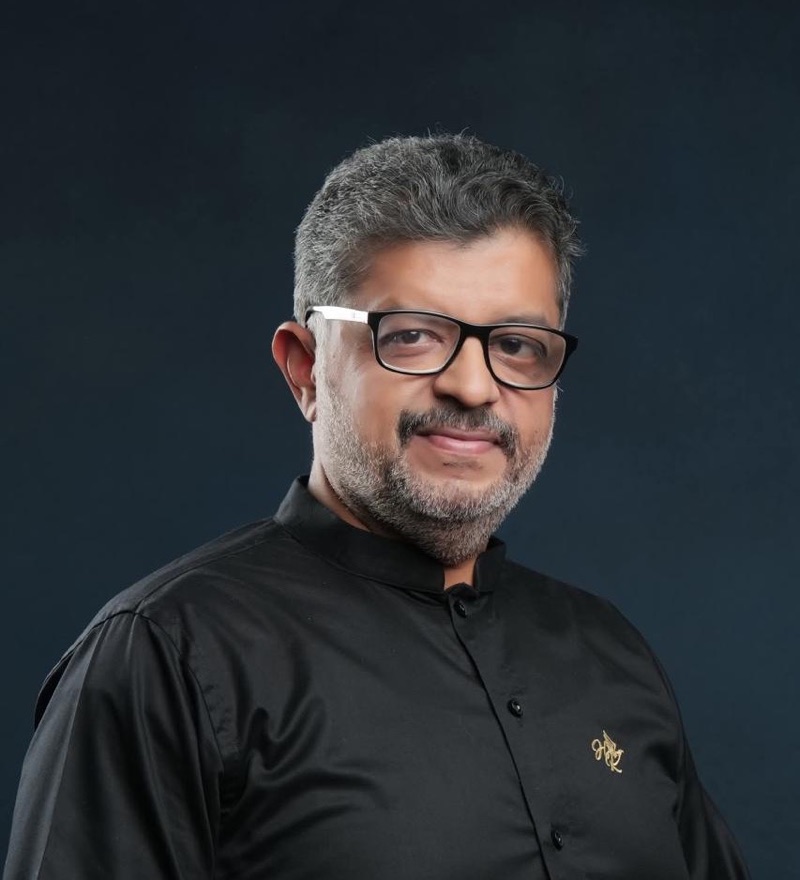
S. Harikrishnan has trained in pharmacy and hospital administration and has spent more than three decades building and supporting enterprises that improve lives.
Since 1993, he has led S.N. Hospital as Managing Director, combining healthcare expertise with practical management. Since 2010, he has also led Moon Healthcare, a Chennai-based pharmaceutical marketing company serving Kerala.
His commitment extends beyond business: he volunteers as a startup trainer with the Industries Department, guiding agriculture- and food-based ventures, and serves as chairperson of a Farmer Producer Company supported by the Ministry of Agriculture. His journey reflects a lasting belief in learning, enterprise, community, and purposeful leadership.
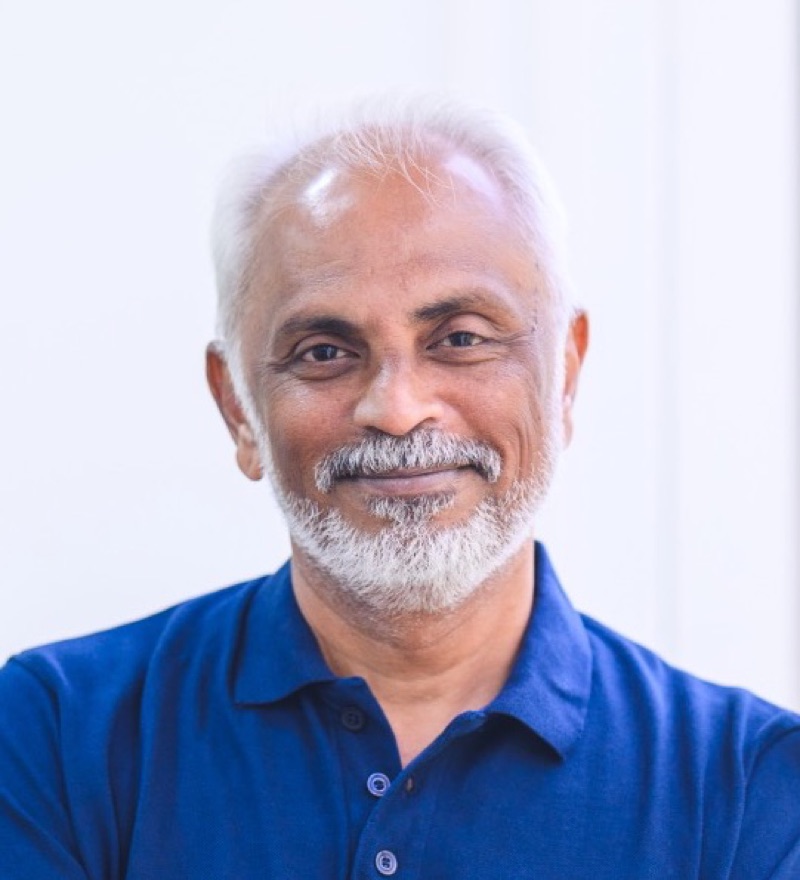
Satish Pillai spent 24 years in global information management businesses, including roles as MD of NielsenIQ India, Regional President TransUnion Asia and MD & CEO, TransUnion CIBIL.
His career was centered around living and re-telling stories of them, their products/services, their clients and their journeys of "becoming".
He is now busy building two companies that center on telling stories of micro businesses in Kerala, of students ready to step into the workplace, of leaders and companies looking to find their untold stories, and of finding public data that provides a deeper context to business problems.
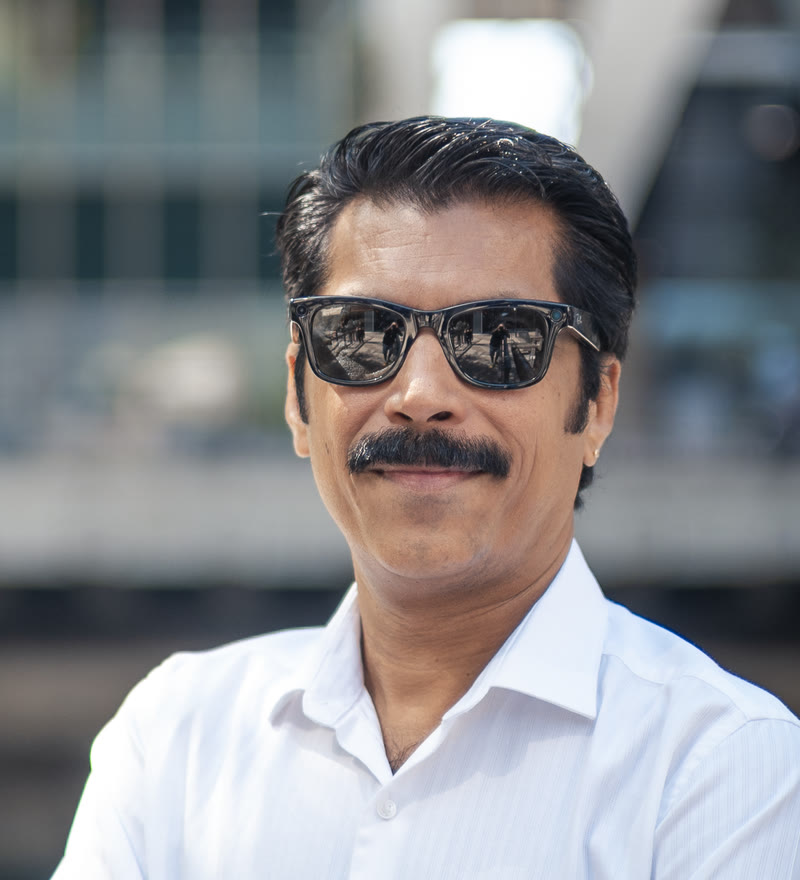
Sanjay Raju is a technology architect and evangelist who has spent over twenty years noticing the gaps in how people go about their lives and designing the systems that fill them. Those years have taught him that the hard part was never the code. It was the seeing. He believes the best technology is the kind nobody talks about. It simply makes someone's day a little easier.
Founders and individuals come to him with an idea that's vivid in their head and shapeless everywhere else. There is nothing he loves more than sitting with them until that shape becomes clear, then reshaping it into something practical, usable and true to the real world. Then builds it properly, so it holds up under real users and real growth.
The work he's proudest of isn't the clever kind. It's the app someone opens without thinking, the system that improved someone's day, the tool a community quietly made their own.
Over the years we have been fortunate to meet people who trusted us with important parts of their journeys: entrepreneurs thinking through difficult choices, students describing their hopes, leaders admitting uncertainty, and organisations allowing us to see what is rarely visible from the outside.
Each conversation taught us something. Not because we arrived with all the answers, but because people were generous enough to share their experience. We do not believe those lessons belong to us alone. Experience becomes more valuable when it continues its journey.
This is why we continue. We can share what we have been fortunate to learn. We believe that because we can, we should. Being invited to participate is itself a privilege.
We are fortunate to have learned from many journeys. We simply try to ensure those lessons do not end with us.
We hope to be known less for arriving with answers and more for taking the time to understand the question. We hope that an entrepreneur feels their journey has been respected, a student feels their ability has been recognised, a leader feels safe enough to share uncertainty, and an analyst remembers that every data point began with a real event involving real people.
We will not always get this right. This manuscript is a promise to keep returning to the standard we have chosen.
Every visitor should feel understood before they feel advised.
Passages from Book One are published here as they are finished; films and stories join them as they are ready.
Every story already has an author.
Every business has a story. Every student has a dream. Every organisation has a culture. Every decision has a data history.
Before we think about where any of them could go, we believe they deserve to be understood. Respect comes before advice. Understanding gives advice meaning.
There are moments in a journey when the old way no longer answers every question, while the new way is not yet clear. These moments arrive with an unfamiliar responsibility: the sense that working longer will not solve what comes next.
Across Kerala, thousands of owner-led businesses open their doors every morning. They were not created to become headlines or unicorns. They were created because someone chose to build: a livelihood, a name that customers could trust, work for other people, and a future for a family.
As the business grows, the questions change. Should we expand? Should we borrow? Can someone outside the family be trusted with an important part of the business? What happens if the next generation wants a different life? These are business questions, but they also touch the owner's identity, responsibility and hope.
A student faces a different threshold. Years of education have created knowledge, but the first workplace asks for technical knowledge in context, for teamwork and for learning of a new kind. An organisation faces another: its culture has already been formed through stories and habits long before a programme is designed to change it. An analyst faces another: more information does not always create more understanding.
The Company of Four is interested in these moments in between. Not because people need to be remade, but because what they have already built deserves to be seen before anyone suggests what should come next.
We begin by seeing what it took to get here.
An owner-led business may no longer be small in ambition, yet may still depend on the owner for every decision. A student may no longer be only a learner, yet may not have experienced the responsibility of real work. An organisation may have outgrown the stories of its early years, yet may not have found the stories that should guide its future. A company may have abundant data, yet still lack the context needed to decide.
These are not failures. They are stages of becoming. They can feel uncertain because the past is familiar and the future is not. They can also be the moments when one thoughtful conversation has lasting value.
The Company of Four exists for the moments when one chapter is ending and the next has not yet been written.
Over the years we have been fortunate to meet people who trusted us with important parts of their journeys: entrepreneurs thinking through difficult choices, students describing their hopes, leaders admitting uncertainty, and organisations allowing us to see what is rarely visible from the outside.
Each conversation taught us something. Not because we arrived with all the answers, but because people were generous enough to share their experience.
We do not believe those lessons belong to us alone. Experience becomes more valuable when it continues its journey. If something learned in one business can help another founder avoid a painful mistake, if a leader's story can help another leader act with greater care, or if context can help an analyst make a better decision, then that experience has found another purpose.
This is why we continue. We can share what we have been fortunate to learn. We believe that because we can, we should. Being invited to participate is itself a privilege.
We are fortunate to have learned from many journeys. We simply try to ensure those lessons do not end with us.
The past. We see the courage it took to begin, the sacrifices that were made, the relationships that were built and the decisions that brought the person or organisation here. The past is not a preface to be skipped. It explains the present.
The present. We look honestly at today: the pride, the pressure, the opportunities, the uncertainty and the decisions that cannot be postponed. Today's difficulty does not reduce the value of what has already been built.
The future. We ask what they hope to build. Not what we think they should become. A stronger local business can be as meaningful as a large national one. Success is not measured by size alone, but by how close the business comes to what its builders hoped it could be.
We hope to be known less for arriving with answers and more for taking the time to understand the question.
We hope that an entrepreneur feels their journey has been respected, a student feels their ability has been recognised, a leader feels safe enough to share uncertainty, and an analyst remembers that every data point began with a real event involving real people.
We will not always get this right. This manuscript is a promise to keep returning to the standard we have chosen.
Every visitor should feel understood before they feel advised.
One family's growth journey, in their own words.
External links open in a new tab.
Tell us what you are building, becoming, remembering or trying to understand. A few honest lines are enough. We read everything, and one of the founders replies personally within three working days. No obligation follows a conversation.
WhatsApp has opened with what you wrote. Send it there, and one of the founders will reply within three working days, in the language you chose.
It has reached the founders directly. One of the founders will reply within three working days, in the language you chose.